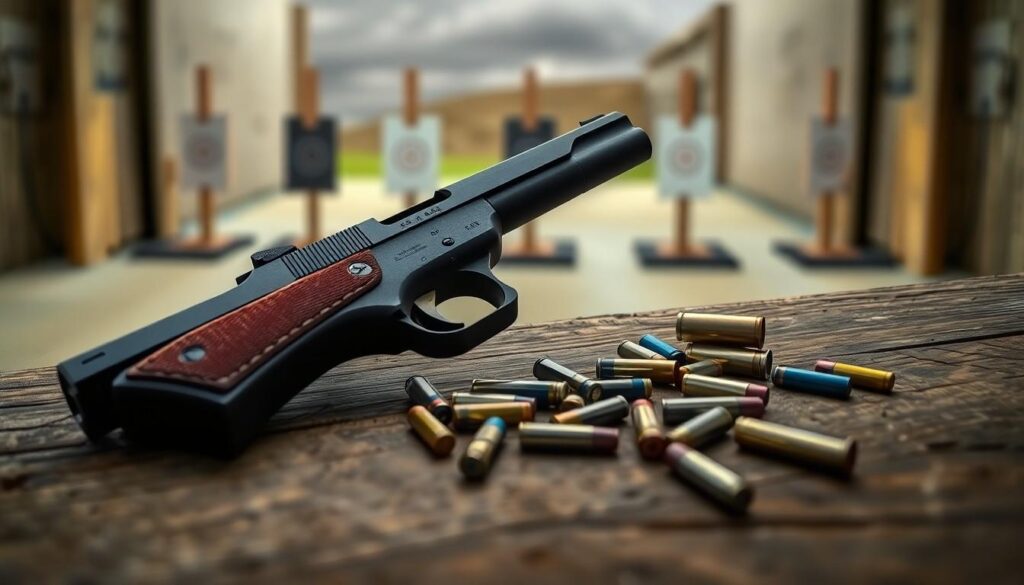
When it comes to firearms, few calibers inspire as much debate and admiration as the .45 ACP. Known for its stopping power and rich history, this round has earned a special place in the hearts of enthusiasts and professionals alike. But what about its performance? Enter the world of feet per second (FPS) where the magic happens.
Overview of 45 ACP FPS
The .45 ACP caliber boasts a significant reputation for delivering effective performance, particularly in terms of feet per second (FPS). Commonly, .45 ACP ammunition exhibits FPS ranges from 830 to 1,000. This range depends on various factors, including projectile weight, powder type, and barrel length.
Manufacturers utilize different bullet weights, typically 185 grains, 230 grains, or more. The FPS increases with lighter bullets. For instance, a 185-grain hollow point can reach speeds around 1,050 FPS, while the standard 230-grain round averages about 850 FPS.
When comparing it to other calibers, the .45 ACP offers a balance of speed and stopping power. The combination of relatively low FPS and heavy bullet weight contributes to its effectiveness in self-defense scenarios.
Ballistics testing often evaluates this caliber’s terminal performance. Testing consistently shows that the .45 ACP produces significant energy upon impact. Energy calculations indicate values around 350 to 500 foot-pounds, enhancing its reputation as a formidable option for defensive use.
Factors such as barrel length impact FPS measurements. Longer barrels tend to produce higher velocities due to increased powder burn time. Conversely, shorter barrels might experience a decrease in FPS but provide better handling in concealed carry situations.
Understanding the FPS of .45 ACP rounds proves essential for shooters. Knowledge of FPS helps in selecting the right ammunition for specific applications. The combination of speed, weight, and impact makes the .45 ACP a consistent choice in both civilian and law enforcement circles.
Factors Affecting 45 ACP FPS

The FPS of a .45 ACP round is influenced by several critical factors.
Bullet Weight
Bullet weight significantly impacts the velocity at which a round travels. Heavier bullets, like the standard 230-grain, typically achieve around 850 FPS. Lighter bullets, such as the 185-grain hollow point, can reach speeds close to 1,050 FPS. Increased weight often results in higher energy transfer upon impact, which enhances stopping power. Different applications may require specific bullet weights, balancing speed and effectiveness. Shooters should consider the intended use, such as self-defense or target shooting, when selecting the appropriate bullet weight for optimal performance.
Powder Type
Powder type plays a crucial role in determining FPS. Various powders generate different burn rates, affecting muzzle velocity. Some powders are optimized for producing high velocity, while others provide consistent performance at lower speeds. A faster-burning powder tends to produce higher FPS, making it suitable for lighter projectiles. Conversely, slower powders can enhance overall energy and effectiveness, especially with heavier bullets. Choosing the right powder can maximize the potential of a specific load, ensuring reliable performance in various shooting scenarios.
Comparing 45 ACP FPS with Other Calibers
The .45 ACP caliber’s FPS can be compared to other popular calibers to highlight its unique characteristics. 9mm, for instance, generally achieves higher FPS, ranging from 1,100 to 1,300. This increased speed often results in lower energy transfer upon impact, which can affect stopping power.
.40 S&W caliber delivers FPS between 950 and 1,300, providing a balance between the .45 ACP’s power and the 9mm’s speed. The choice between these calibers often depends on personal preference and intended use. Selecting a calibration requires understanding the shooting context, like self-defense or competition.
Another notable caliber is .357 Magnum, which typically produces FPS around 1,200 to 1,450. This caliber offers significant energy and speed, making it effective for hunting and defense. However, recoil can be challenging for some shooters.
A general comparison table illustrates FPS data across various common calibers:
| Caliber | FPS Range | Energy Transfer |
|---|---|---|
| .45 ACP | 830 – 1,000 | 350 – 500 foot-pounds |
| 9mm | 1,100 – 1,300 | 350 – 450 foot-pounds |
| .40 S&W | 950 – 1,300 | 400 – 500 foot-pounds |
| .357 Magnum | 1,200 – 1,450 | 500 – 700 foot-pounds |
A shooter choosing between these options should consider both FPS and energy transfer requirements based on their specific needs. Understanding these distinctions informs decisions about ammunition selection.
Benefits of Understanding 45 ACP FPS
Understanding .45 ACP FPS helps shooters make informed decisions about ammunition selection. Improved knowledge aids in selecting the right bullet weight for specific applications, whether self-defense or target shooting. Higher FPS values correlate with greater accuracy over distance, making this knowledge essential for optimal performance.
Shooter safety increases with a clear understanding of .45 ACP’s velocity characteristics. Different projectile weights affect shooting mechanics. Lighter bullets, such as 185 grains, can achieve around 1,050 FPS, enhancing speed in certain scenarios. Conversely, heavier bullets typically provide better energy transfer upon impact, which improves stopping power.
Accuracy benefits from insight into FPS. Specific applications often require a tailored approach to maximize performance. For example, knowing that the standard 230-grain rounds average about 850 FPS allows shooters to anticipate ballistics better. When comparing the .45 ACP to other calibers, such as the 9mm or the .40 S&W, understanding FPS helps appreciate the balance between speed and energy transfer.
Energy transfer upon impact remains a crucial factor in self-defense situations. Significant energy delivered by the .45 ACP, with values between 350 to 500 foot-pounds, enhances its reputation as a reliable caliber. Additionally, evaluating factors like barrel length is essential, as longer barrels typically generate higher velocities, further optimizing performance.
Awareness of how powder type influences FPS offers more control over ammunition performance. Fast-burning powders can elevate FPS, presenting unique advantages depending on shooting scenarios. Overall, understanding .45 ACP FPS equips shooters with valuable insights for improved accuracy, effectiveness, and safety in various contexts.
Real-World Applications of 45 ACP FPS
.45 ACP ammunition finds practical applications in various situations, especially self-defense scenarios. Law enforcement agencies frequently choose this caliber for its effective stopping power, optimizing officer safety during encounters. Home defense remains another primary use, where its ability to deliver high energy levels makes it a reliable choice for personal protection.
Competitive shooting also benefits from the .45 ACP’s performance characteristics. Many shooters appreciate its manageable recoil, which permits accurate follow-up shots. Target shooting enthusiasts often favor this caliber for its balance of speed and stopping power, providing an engaging experience at the range.
Hunters utilize .45 ACP for small to medium game, taking advantage of its energy transfer upon impact. While not as common as rifle calibers, it offers effective terminal performance, making it suitable for close-range hunting. This versatility adds to its appeal across various shooting disciplines.
Situational adaptability remains a significant aspect of the .45 ACP’s popularity. Whether in urban environments or rural settings, it performs well across different contexts. Understanding FPS can lead to informed decisions regarding ammunition selection, intensifying the effectiveness of the caliber in real-world situations.
Specific FPS values influence the choice of bullets, especially for self-defense applications. Many prefer lighter projectiles, like the 185-grain hollow point, which can achieve speeds around 1,050 FPS for maximum effectiveness. Heavier rounds, such as the standard 230-grain, deliver an average of 850 FPS, prioritizing sustained energy transfer. This data underlines the caliber’s strengths across various defensive and tactical applications.
Conclusion
Understanding .45 ACP FPS is essential for anyone looking to maximize their shooting performance. The interplay between bullet weight powder type and barrel length significantly influences velocity and energy transfer. This knowledge enables shooters to select the right ammunition for their specific needs whether for self-defense target shooting or hunting.
The .45 ACP’s reputation for stopping power combined with its manageable recoil makes it a versatile choice across various applications. By considering FPS alongside other factors shooters can enhance their accuracy and effectiveness. With its proven track record and reliable performance the .45 ACP remains a top contender in the world of firearms.