Erandur isn’t your typical Skyrim follower. He’s got baggage, the kind involving dark gods, cult rituals, and a lifetime of guilt. If you stumbled into Dawnstar and found a Dark Elf priest of Mara desperately trying to help the town, you’ve already met him. But deciding whether to trust him, kill him, or drag him along on your adventures? That’s where things get interesting.
This guide breaks down everything you need to know about Erandur: his surprisingly grim backstory, the Waking Nightmare quest line, the pivotal choice that determines his fate, and what he brings to the table as a companion. Whether you’re hunting for a magic-slinging follower or just want to know if that Skull of Corruption is worth the moral compromise, we’ve got you covered.
Table of Contents
ToggleKey Takeaways
- Erandur in Skyrim is a Dunmer priest with a dark past as a cult member of Vaermina who now seeks redemption through serving Mara, making him a morally complex companion option.
- The Waking Nightmare quest forces a critical choice: kill Erandur to claim the Skull of Corruption Daedric artifact, or spare him to recruit him as a permanent mage follower—but you cannot get both in a single playthrough.
- Erandur excels as a ranged damage dealer with versatile Destruction and Restoration spells, self-healing capability, and the ability to level up to 50, making him ideal for melee-focused Dragonborns who need magical support.
- The Skull of Corruption, while required for the Oblivion Walker achievement, is mechanically underwhelming compared to other Daedric artifacts and staffs available in the late game.
- Erandur becomes a permanent and free follower if you let him complete the destruction ritual, offering a unique backstory and dialogue that provide more immersion than generic hired followers.
- Avoid pairing Erandur with pure stealth or mage builds—his loud spells and aggressive AI disrupt stealth gameplay, and as a mage himself, he becomes redundant when your Dragonborn is also magic-focused.
Who Is Erandur? Background and Role in Skyrim
Erandur is a Dunmer priest of Mara stationed at the Windpeak Inn in Dawnstar. He shows up during the Waking Nightmare quest, offering to help solve the town’s collective insomnia crisis caused by nightmares. On the surface, he seems like a compassionate cleric trying to do good. Dig a little deeper, and you’ll uncover a past that’s anything but holy.
Erandur’s History as a Priest of Mara
Currently, Erandur serves Mara, the goddess of love and compassion. He took up this path as an act of penance, dedicating himself to helping others and atoning for his former life. He’s earnest about it, too, his dialogue and actions during the quest show genuine remorse and a desire to make things right.
He’s not a high-ranking member of the temple hierarchy, but he’s knowledgeable about divine magic, Daedric artifacts, and the rituals needed to counter Vaermina’s influence. His expertise stems directly from his previous life, which makes him uniquely qualified to handle the Nightcaller Temple situation.
His Dark Past with the Cult of Vaermina
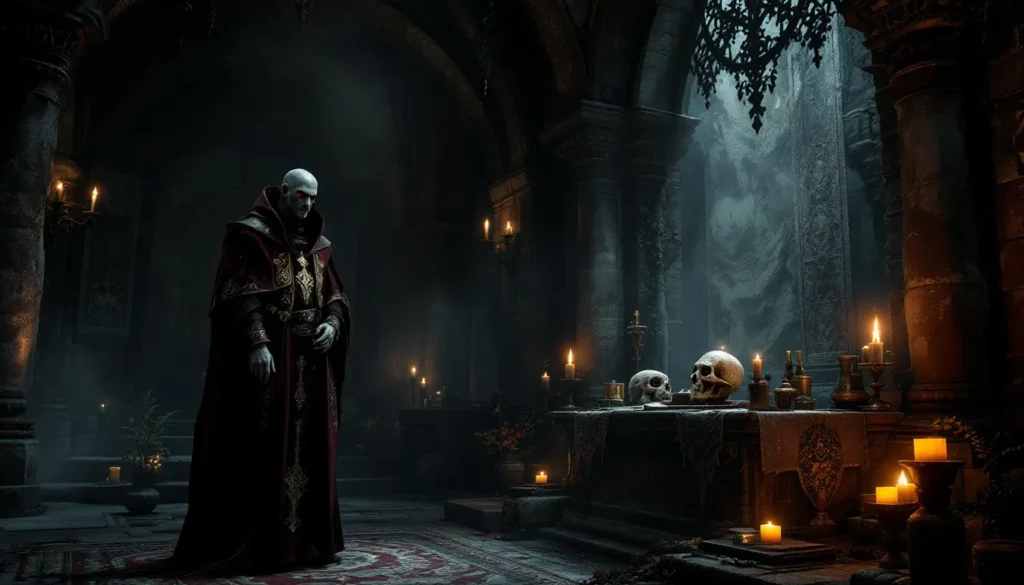
Here’s where it gets messy. Erandur wasn’t always a priest of Mara. Decades ago, he went by the name Casimir and served as a priest of Vaermina, the Daedric Prince of nightmares and dreams. He was part of the cult stationed at Nightcaller Temple, the very place causing Dawnstar’s current troubles.
During an attack by enemies of the cult (the specifics are murky, but likely rival forces or townspeople), Casimir and another priest named Veren Duleri released the Miasma, a magical barrier powered by the Skull of Corruption that puts everyone inside the temple into eternal sleep while flooding them with nightmares. Casimir abandoned his fellow cultists, leaving them trapped in this nightmarish stasis, and fled.
He later renounced Vaermina, adopted the name Erandur, and sought redemption through Mara. But the Miasma’s effects started leaking into Dawnstar years later, bringing Erandur back to face his past. Whether he’s truly changed or just running damage control is part of the moral ambiguity that makes his character compelling.
How to Find and Recruit Erandur
Erandur doesn’t just wander the roads like some followers. You’ll need to head to a specific location and trigger his quest to even meet him.
Starting the ‘Waking Nightmare’ Quest
Travel to Dawnstar, the mining town on Skyrim’s northern coast. Once you arrive, talk to the locals, especially the innkeeper at the Windpeak Inn or the Jarl’s steward. They’ll mention that the entire town is suffering from relentless nightmares and nobody’s getting any sleep.
You can also trigger the quest by speaking directly to Erandur inside the Windpeak Inn. He’ll be standing near the center of the room, and he’ll explain that he believes the nightmares are linked to Nightcaller Temple, an old cult site dedicated to Vaermina. He’ll ask for your help in ending the curse.
The quest is called “Waking Nightmare” and it’s a Daedric quest, meaning it involves one of the Daedric Princes and typically results in a Daedric artifact reward. Accept his request, and Erandur will agree to travel with you to the temple.
Traveling to Nightcaller Temple
Nightcaller Temple is located northwest of Dawnstar, perched on a hill overlooking the coast. It’s a short trek, and Erandur will follow you there as a temporary companion. He’s essential during this portion, so he can’t die, he’ll just kneel if his health drops too low.
The temple entrance is marked by a large stone structure. Once you arrive, Erandur will provide some context about the temple’s history and the cult’s activities. He’ll also explain the Miasma barrier and why you need to go deeper inside to stop it.
Waking Nightmare Quest Walkthrough
The Waking Nightmare quest is a multi-stage dungeon crawl with some puzzle elements and a memory sequence that’s genuinely unsettling. Erandur stays with you for most of it, providing exposition and magical support.
Navigating Nightcaller Temple with Erandur
The temple is filled with Orcish invaders who tried to raid the place and got trapped in the Miasma. They’re now corrupted by Vaermina’s influence and will attack on sight. The enemies include standard bandits and Orcs, so they’re not particularly tough if you’re mid-level or higher.
Erandur will help fight them off using his Destruction and Restoration spells. He’s competent in combat, though not a powerhouse. Let him tank some hits if you’re a squishy mage or archer, but don’t rely on him to carry the fight.
You’ll need to progress through the temple, clearing rooms and following Erandur’s directions. He’ll point out key locations, including the library, where you need to find a book called “The Dreamstride.” This book contains the ritual necessary to break the Miasma barrier protecting the inner sanctum.
The library section involves fighting off more enemies and navigating some minor environmental hazards. Once you grab the book, Erandur will explain that you need to perform the Dreamstride ritual to access the memories of the past and find the ceremonial potion required to dispel the barrier.
The Dreamstride Ritual and Memory Sequence
This is where the quest gets interesting. Erandur will instruct you to drink the Dreamstride Potion, which sends your consciousness back in time into the body of Casimir (Erandur’s former identity) during the night the Miasma was released.
You’ll experience the events firsthand: the cult under attack, the desperate decision to release the Miasma, and Casimir’s cowardly flight. It’s a brief sequence, but it adds narrative weight and shows you exactly what Erandur is trying to atone for.
Your objective during the memory is to locate the Ceremonial Potion of Torpor in the laboratory. Once you grab it, you’ll snap back to the present. Use the potion to dispel the Miasma barrier, and you’ll gain access to the inner sanctum where the Skull of Corruption rests.
Before you can claim it, Erandur will insist on performing a ritual to destroy the Skull and end Vaermina’s influence for good. This is where the quest’s pivotal choice comes into play, and players looking for deeper quest walktoughs often debate the best outcome.
The Critical Choice: Kill Erandur or Spare Him?
As Erandur begins the ritual to destroy the Skull of Corruption, Vaermina herself intervenes. She speaks directly to you, urging you to kill Erandur before he completes the ritual. She argues that he’s a traitor to her and that you deserve the Skull as a reward for your efforts.
This is a genuine moral and mechanical choice, and it has permanent consequences. There’s no way to get both Erandur as a follower and the Skull of Corruption in a single playthrough without console commands or mods.
What Happens If You Kill Erandur
If you attack Erandur during the ritual, he’ll turn hostile and fight back briefly before dying. Once he’s dead, you can claim the Skull of Corruption from the altar. Vaermina will reward you, and the quest completes.
The Skull of Corruption is a staff that deals damage and becomes more powerful when used on sleeping targets. Specifically, it starts with a base damage of 20 points and can be upgraded to 50 points of damage by using it to harvest dreams from sleeping NPCs. You need to “feed” it dreams from ten sleeping people to reach max power.
It’s a unique Daedric artifact, so if you’re a completionist aiming to collect all fifteen artifacts for the “Oblivion Walker” achievement, you’ll need to take this route. But, the Skull isn’t particularly strong compared to other staffs or spells available in the game, especially in the late game.
The downside? You lose Erandur as a potential follower, and narratively, you’re siding with a Daedric Prince over a remorseful priest trying to make amends. It’s the “evil” choice, though Skyrim doesn’t explicitly punish you for it beyond losing Erandur.
What Happens If You Spare Erandur
If you wait and let Erandur complete the ritual, he’ll successfully destroy the Skull of Corruption. Vaermina’s influence is severed, the nightmares plaguing Dawnstar end, and Erandur survives.
Once the quest concludes, Erandur becomes available as a permanent follower. He’ll thank you for trusting him and offer to join you on your adventures. You can recruit him immediately or return to Dawnstar later to pick him up.
This is the “good” choice and results in a solid magic-focused companion. But, you permanently lose access to the Skull of Corruption and miss out on one Daedric artifact for the achievement. If you’re not concerned with the Oblivion Walker achievement or prefer having a reliable follower over a mediocre staff, sparing Erandur is the better long-term option.
Erandur as a Follower: Stats, Abilities, and Combat Style
If you spare Erandur, he joins your roster of potential followers. He’s classified as a mage follower, which means his combat style revolves around spells rather than melee or archery. His base stats and abilities are fixed, though he will level with you up to a cap.
Erandur’s maximum level is 50, which is respectable and keeps him viable through most of the main game content. His health pool is average for a mage follower, around 557 HP at max level, so he’s not a tank, but he won’t fold instantly in combat either.
He’s permanently essential during the Waking Nightmare quest, but once he becomes a follower, he can die like any other non-protected companion. If you’re playing on higher difficulties or tackling challenging content, keep an eye on him or consider using the community modding tools to adjust his stats or make him essential.
Erandur’s Spell Arsenal and Magic Abilities
Erandur has a solid lineup of Destruction and Restoration spells. His primary offensive spells include Firebolt, Ice Spike, and Chain Lightning, giving him decent elemental coverage. He’ll swap between these based on enemy resistances and range, which makes him more adaptable than some one-trick mage followers.
On the defensive side, he knows Fast Healing and Healing Hands, so he can top himself off and even heal you in a pinch. This makes him more self-sufficient than pure damage casters and adds utility if you’re running a melee build and need some backup healing.
He also uses Calm and Fury spells occasionally, though these are situational and less impactful in most fights. They’re more flavor than function, tying into his role as a priest of Mara.
Erandur doesn’t carry a weapon by default and won’t equip one unless you explicitly give him a staff or melee weapon. Even then, he strongly prefers casting spells. If you want him to function as a pure mage, just leave him with his default loadout.
Best Uses for Erandur in Your Party
Erandur excels as a ranged damage dealer and support caster. He’s best paired with melee-focused Dragonborns who can hold aggro while he nukes from the backline. His healing spells are a nice bonus, but don’t expect him to keep you alive in prolonged slugfests, his healing output is modest.
He’s also solid for players who prefer stealth archer builds but want some magical backup when things go loud. His spells can draw aggro and give you breathing room to reposition.
One notable advantage: Erandur’s dialogue and personality are more fleshed out than many generic followers, and some players enjoy the modding community on the Skyrim Archives for enhancing his interactions. He’s got unique lines and a backstory that makes him feel like more than a walking inventory mule.
Erandur’s Strengths and Weaknesses as a Companion
Like any follower, Erandur has his upsides and downsides. Understanding these will help you decide if he’s worth keeping around or if you’d rather swap him out for someone else.
Advantages of Using Erandur
Versatile magic damage: Erandur’s access to fire, frost, and shock spells means he’s rarely hard-countered by enemy resistances. He’ll adapt his damage type on the fly, which is more than you can say for followers locked into one element.
Self-healing capability: His Restoration spells let him recover health mid-fight, reducing the need for babysitting. This makes him more durable than his HP pool suggests.
Levels up to 50: At max level, Erandur is statistically on par with most mid-to-high-tier followers. He won’t compete with powerhouses like Serana or Frea, but he’s far from useless.
Unique backstory and dialogue: If you care about roleplaying or immersion, Erandur’s guilt-ridden redemption arc adds narrative weight. He’s got personality, unlike many generic hirelings.
No recruitment fee: Unlike mercenaries such as Vorstag and other hirelings, Erandur joins you for free after the quest. No gold required.
Limitations and Drawbacks
Can die permanently: Unlike essential followers like Serana, Erandur can be killed in combat once he’s a follower. If you’re careless with AoE attacks or let him face-tank dragons, you might lose him for good.
Mediocre melee and archery stats: If you try to gear him up as a hybrid or physical damage dealer, he’ll underperform. His stats and AI are optimized for magic, so forcing him into another role is inefficient.
No unique perks or abilities: Erandur doesn’t have any special follower perks like Aela’s werewolf transformation or Serana’s necromancy. He’s a straightforward mage with no hidden tricks.
Lacks sneak compatibility: Erandur is terrible for stealth builds. His spells are loud and flashy, and his AI will happily blast enemies you’re trying to pick off quietly. If you’re running a pure stealth archer, he’s a liability.
Average carry capacity: Like most humanoid followers, Erandur’s carry weight is modest. He’s not a pack mule like a companion animal, so don’t expect him to haul tons of loot.
Tips for Maximizing Erandur’s Effectiveness
If you’re committed to keeping Erandur around, a few tweaks can significantly boost his performance and survivability.
Best Equipment and Gear for Erandur
Erandur’s default equipment is generic robes and a hood. You can and should upgrade him with better gear to increase his survivability and damage output.
Armor: Give him enchanted robes that boost magicka regeneration, reduce spell costs, or increase maximum magicka. Robes from the College of Winterhold questline, like the Master Robes of Destruction, are excellent choices. Alternatively, enchant your own robes with Fortify Destruction and Fortify Health enchantments.
Headgear: Morokei (the Dragon Priest mask) is ideal if you’re not using it yourself, as it provides 100% magicka regeneration. Otherwise, enchanted circlets or hoods with magicka-boosting stats work fine.
Jewelry: Equip rings and amulets with Fortify Magicka or Fortify Health enchantments. These stack and give him more staying power in extended fights.
Staffs: While Erandur defaults to his spells, giving him a Staff of Fireball or Staff of Lightning Bolt can supplement his damage. He’ll use staffs if his magicka is depleted, so it’s a decent backup option.
Avoid heavy armor: Erandur’s AI is coded for mage behavior. Heavy armor will slow him down and doesn’t synergize with his spell-casting. Stick to robes or light armor at most.
Ideal Playstyles and Character Builds to Pair with Erandur
Erandur shines in specific party compositions. Here’s where he fits best:
Two-handed melee builds: If you’re swinging a greatsword or battleaxe and soaking damage, Erandur provides ranged DPS and occasional healing. He’ll stay back and pepper enemies while you hold the line.
Sword-and-board tanks: Similar to two-handed builds, but with more emphasis on defense. Erandur’s damage output complements your survivability, and his healing can top you off between fights.
Summoner mages: If you’re running a conjuration-focused build, Erandur adds raw damage while your atronachs or Dremora tanks. This creates a three-pronged attack that overwhelms most enemies.
Avoid pairing him with stealth builds: Erandur’s loud spells and aggressive AI make him a nightmare for stealth archers or assassins. He’ll blow your cover constantly.
Avoid pure mage Dragonborns: If you’re also a mage, Erandur becomes redundant. You’re both fighting for the same role, and his damage won’t meaningfully speed up kills compared to having a tank or archer follower to cover your weaknesses.
The Skull of Corruption: Should You Take It?
The Skull of Corruption is one of Skyrim’s fifteen Daedric artifacts, and deciding whether to claim it depends on your priorities.
Mechanically, the Skull of Corruption functions as a staff. Its base attack deals 20 points of damage to health and magicka. After you “charge” it by using it on ten sleeping NPCs, it deals 50 points of damage instead. You can find sleeping NPCs in inns, houses, and camps at night, just use the Skull on them while they’re asleep (without waking them) to harvest their dreams.
The problem? The Skull is underwhelming compared to other Daedric artifacts and staffs. By the time you obtain it, you likely have access to more powerful spells, enchanted weapons, or other staffs that outclass it. The dream-charging mechanic is tedious, and the payoff isn’t worth the effort for most players.
The Oblivion Walker achievement requires you to collect 15 Daedric artifacts. The Skull counts toward this total, so if you’re achievement hunting, you’ll need to kill Erandur and take it. But, you can miss one artifact and still unlock the achievement, so if you’d rather have Erandur as a follower, you can skip the Skull and get your fifteenth artifact elsewhere.
From a roleplaying perspective, taking the Skull means siding with Vaermina and betraying Erandur at his most vulnerable moment. It’s the morally dubious choice and doesn’t fit most “heroic” character builds. If you’re doing an evil or opportunistic playthrough, it makes sense narratively.
Bottom line: Take the Skull if you’re an achievement completionist or want to collect all Daedric artifacts for display purposes. Spare Erandur if you want a competent mage follower or prefer the redemption narrative. The Skull itself isn’t powerful enough to justify killing Erandur unless you have a specific reason to want it.
Conclusion
Erandur is one of Skyrim’s more nuanced followers, a priest haunted by his past, offering redemption or betrayal depending on your choice. His quest, Waking Nightmare, delivers solid dungeon crawling and a memorable moral dilemma, while his capabilities as a follower make him a reliable mage companion for the right builds.
If you’re running a melee character and want magical support without the hassle of managing a summoned atronach, Erandur fits the bill. If you’re chasing achievements or prefer the Skull of Corruption as a collectible, you’ll have to make the hard call and take him down. Either way, he’s worth experiencing at least once, just don’t expect him to replace top-tier followers in raw power.
Whether you’re exploring more about followers or diving into Skyrim community discussions, Erandur remains a memorable part of the game’s rich cast.