When Bethesda released The Elder Scrolls V: Skyrim in November 2011, it didn’t just deliver a sprawling open-world RPG, it created a visual benchmark that would influence game design for over a decade. Behind the snowy peaks, ancient Nordic ruins, and fire-breathing dragons lay thousands of hours of meticulous concept art, sketches that transformed nebulous ideas into the tangible world of Tamriel.
Even fifteen years after launch, Skyrim’s visual identity remains iconic. The concept art that shaped this world tells the story of how Bethesda’s artists balanced fantasy grandeur with grounded, believable environments. From the initial pencil sketches of Dragonsreach to the final renders of Alduin’s menacing form, these visual masterpieces reveal the creative DNA of one of gaming’s most enduring titles.
For artists, modders, and fans still exploring Skyrim in 2026, whether through the Anniversary Edition or countless community mods, understanding the concept art offers insight into why this game continues to captivate millions. This deep dive explores the artists, techniques, and philosophy that made Skyrim’s visual world unforgettable.
Table of Contents
ToggleKey Takeaways
- Skyrim concept art served as the foundational visual blueprint that unified hundreds of developers and established the game’s iconic Nordic aesthetic through careful study of Scandinavian landscapes, Viking artifacts, and medieval architecture.
- The creative journey from initial sketches to in-game assets involved multiple iteration phases, combining traditional and digital techniques to guide 3D modelers while the concept art established artistic intent that influenced technical compromises and optimizations.
- Adam Adamowicz and the concept art team prioritized believability over spectacle, using restrained color palettes and negative space to make fantastical elements feel grounded and allow key visual moments to have maximum impact.
- Skyrim’s character and creature concept art, from the reptilian dragon designs of Alduin to culturally-specific armor and the decaying Draugr enemies, communicated gameplay mechanics and behavioral intent through visual design alone.
- The grounded fantasy aesthetic and cohesive visual language pioneered in Skyrim concept art influenced industry standards across AAA open-world titles, proving that extensive pre-production visual development directly improves final product quality and market appeal.
- Resources like The Art of Skyrim book and online galleries offer valuable reference material for artists, modders, and designers studying how to balance artistic vision with technical constraints and create compelling fantasy environments.
The Role of Concept Art in Skyrim’s Development
Concept art serves as the visual blueprint for any AAA game, but for Skyrim, it was the foundational language that unified hundreds of developers across multiple disciplines. Before a single polygon was modeled or texture painted, artists created detailed illustrations that communicated mood, scale, and narrative.
Bethesda’s pre-production phase for Skyrim began around 2008, immediately following Fallout 3’s release. The concept team worked closely with game director Todd Howard to establish a visual direction that would differentiate Skyrim from its predecessor, Oblivion, while honoring the Nordic mythology at the game’s core.
How Bethesda’s Artists Defined the Visual Identity
The visual identity of Skyrim emerged from a deliberate pivot away from Oblivion’s high-fantasy aesthetic. Where Cyrodiil featured lush forests and Mediterranean-inspired architecture, Skyrim demanded harsher, colder, and more grounded visuals that reflected the Nord culture’s warrior heritage.
Bethesda’s concept artists studied Scandinavian landscapes, Viking-age artifacts, and medieval European architecture to create a coherent visual language. The team emphasized verticality in their environment designs, towering mountains, deep valleys, and structures built into cliffsides, to create a sense of epic scale while maintaining environmental believability.
Color palettes leaned heavily into whites, grays, and muted earth tones, punctuated by the warm glow of torchlight and the occasional aurora. This restrained approach made moments of visual spectacle, like dragon attacks or magical effects, feel more impactful by contrast.
From Sketches to In-Game Reality
The journey from initial sketch to in-game asset involved multiple iteration phases. Artists typically started with loose thumbnail sketches exploring composition and silhouette. Promising concepts advanced to more detailed paintings that established lighting, materials, and atmospheric conditions.
These paintings served as reference targets for 3D modelers and environment artists. While technical limitations of the Creation Engine meant not every detail could transfer directly, the concept art established the artistic intent that guided compromises and optimizations.
Bethesda employed both traditional and digital techniques during Skyrim’s development. Many artists worked in Photoshop and Corel Painter, building on digital sketches with photo textures and custom brushes. Some preliminary work even began with physical pencil or charcoal sketches before digital refinement, a workflow that added organic imperfection to the final designs.
Exploring Skyrim’s Breathtaking Environment Concept Art
The environment art for Skyrim stands as some of the most memorable in RPG history. The concept team faced the challenge of creating diverse biomes within a single province while maintaining visual cohesion, a balancing act that required careful planning and creative ingenuity.
The Frozen Tundras and Nordic Landscapes
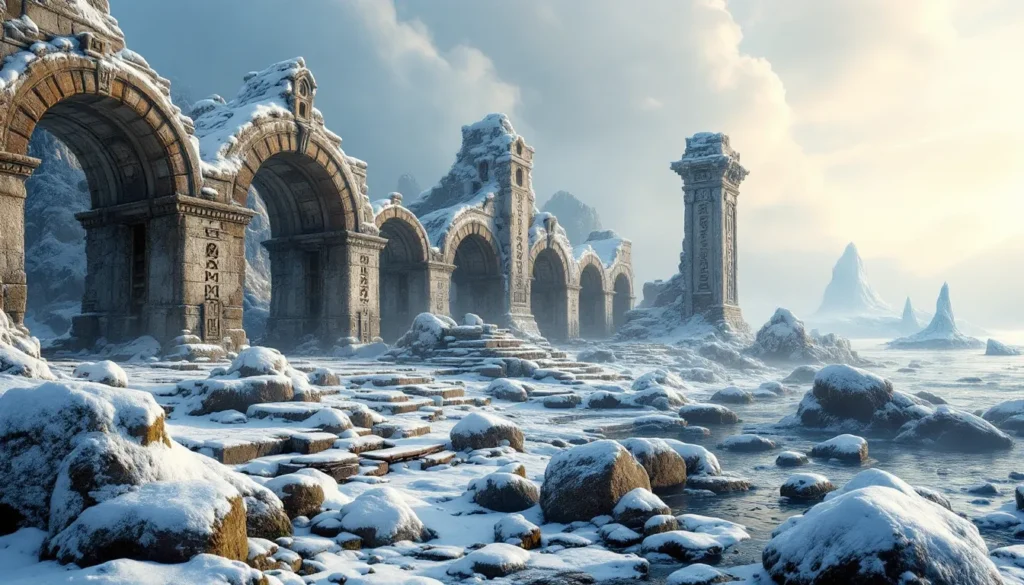
Skyrim’s wilderness defines the player’s first impression and ongoing exploration experience. The concept art for these frozen expanses focused on creating environmental storytelling through landscape features. Ancient standing stones, weathered statues, and half-buried ruins suggested a land with deep history long before the player arrived.
Artists used dramatic lighting to guide the eye and establish mood. Dawn and dusk scenes featured prominently in concept paintings, with low-angle sunlight creating long shadows across snowfields. The aurora borealis became a signature visual element, its ethereal greens and blues providing otherworldly beauty against stark landscapes.
The tundra concepts deliberately avoided monotony through strategic placement of geological features, lone trees, rock formations, frozen waterfalls, that served as navigation landmarks while breaking up the horizon. These details ensured players rarely encountered featureless expanses that might feel empty or boring.
Ancient Ruins and Dwemer Architecture
The Dwemer ruins presented a unique design challenge: creating an ancient, technologically advanced civilization’s architecture that felt alien yet integrated into Skyrim’s world. Concept artists developed a visual language based on brass, bronze, and geometric precision that contrasted sharply with Nordic stonework.
These underground complexes featured industrial aesthetics, massive gears, steam vents, and mechanical components, that suggested functionality beyond mere decoration. The concept art emphasized scale, with tiny human figures dwarfed by enormous machinery and cavernous halls.
Nordic ruins, by contrast, drew from Viking-age burial mounds and medieval fortifications. Concept paintings depicted these structures as partially collapsed, with vegetation reclaiming stonework and elements exposed to harsh weather. The artists balanced accessibility (players needed to navigate these spaces) with atmospheric decay.
Cities and Settlements: Bringing Tamriel to Life
Each of Skyrim’s major cities received extensive concept development to establish distinct visual identities. Whiterun, as the game’s central hub, featured Dragonsreach prominently, a massive mead hall whose dragon-shaped roof became an iconic silhouette. Concept art showed the city built in tiers against a mountainside, creating natural districts and vantage points.
Windhelm, Skyrim’s oldest city, used darker stone and more angular architecture to convey age and militaristic culture. Solitude perched dramatically on a natural stone arch above the sea, its concept art emphasizing the precarious grandeur of Nordic ambition.
Smaller settlements like Riverwood and Rorikstead received simpler treatment but no less attention to detail. Concept art for these locations focused on functional layouts, where would the mill be, how would farms be arranged, what natural resources would sustain the community, that made them feel like lived-in places rather than video game setpieces.
Character Design and Concept Art: Dragons, Races, and NPCs
Character concept art in Skyrim established the visual foundation for hundreds of unique NPCs, enemy types, and the game’s most iconic creatures. The design philosophy emphasized practicality and cultural authenticity over high-fantasy excess.
The Legendary Dragons: Alduin and Beyond
Dragons were Skyrim’s marquee feature and visual centerpiece, requiring designs that felt threatening, ancient, and fundamentally different from typical fantasy interpretations. The concept team explored numerous iterations before settling on the final dragon anatomy.
Early sketches experimented with wing configurations, body proportions, and head shapes. Bethesda’s artists eventually chose a more grounded, almost reptilian design with bat-like wings and crocodilian features. This approach made dragons feel like apex predators rather than mythological abstractions.
Alduin, the World-Eater, received special treatment in concept development. His design incorporated unique textures and spikes that distinguished him from lesser dragons, while his pitch-black coloration with red accents created instant visual menace. Concept paintings depicted him against apocalyptic skies and burning cities, establishing the stakes of the main questline.
Different dragon types, Frost Dragons, Blood Dragons, Elder Dragons, were differentiated through color schemes and detail work visible in concept art. These variations ensured encounters remained visually interesting throughout the game’s progression.
Armor, Weapons, and Equipment Designs
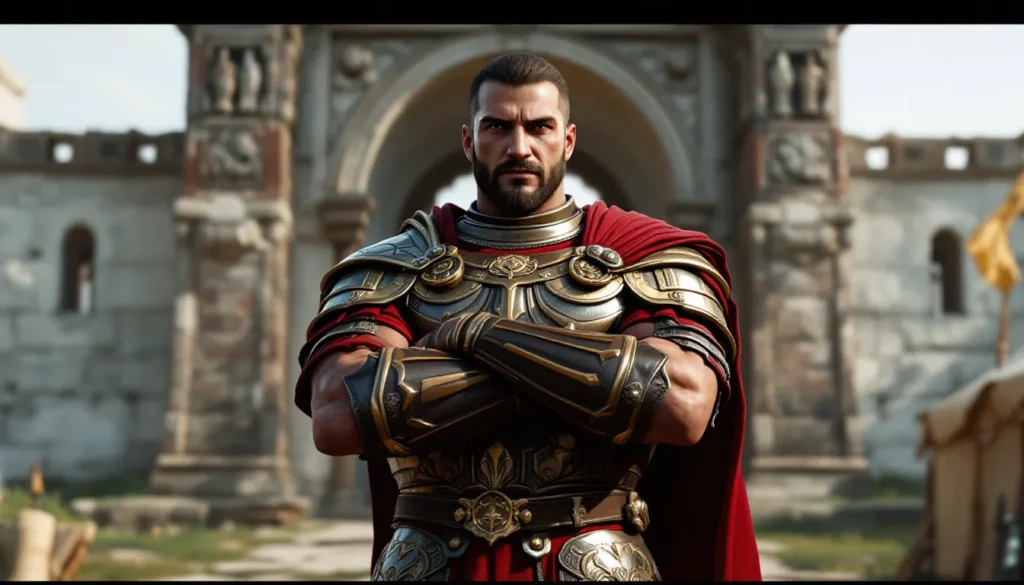
Skyrim’s equipment concept art reflected the cultural identity of its various factions and races. Nordic carved armor featured intricate knotwork and animal motifs drawn from historical Viking artifacts. Imperial armor maintained design continuity with previous Elder Scrolls titles while adding weathering appropriate to Skyrim’s climate.
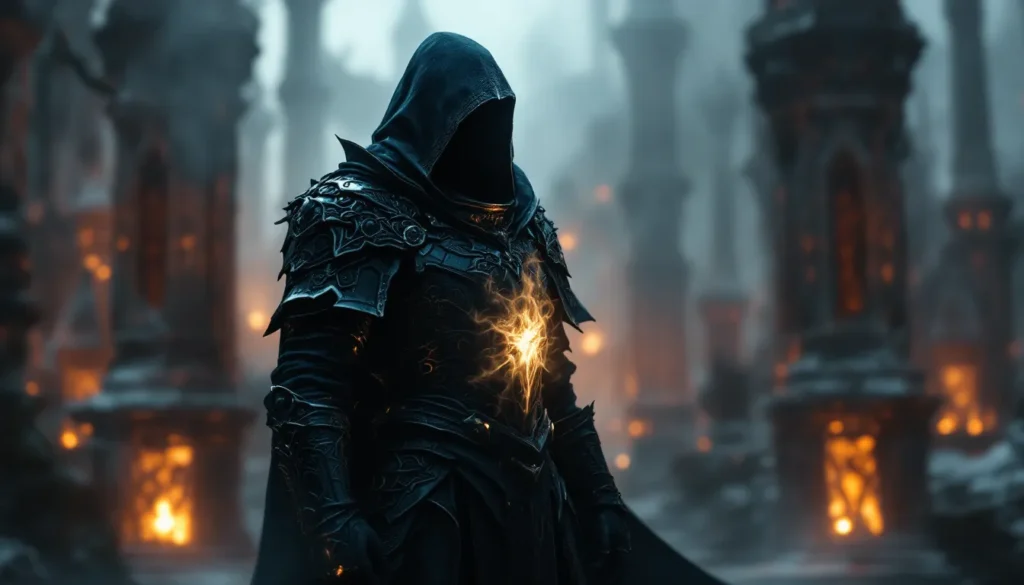
The Daedric armor concepts pushed into more fantastical territory, with its distinctive horned helmet and organic, almost demonic shapes. Artists created multiple iterations exploring how to make this iconic design feel both otherworldly and wearable.
Weapon concepts similarly ranged from practical steel and iron implements to elaborate glass and ebony designs. The concept art often showed weapons in use, helping designers understand balance points and how they’d look during combat animations. Many gamers continue creating mods based on early armor concepts that didn’t make it into the final game.
Creature Concept Art: From Trolls to Draugr
Beyond dragons, Skyrim’s bestiary required concept development for dozens of creature types, each needing distinct silhouettes and behaviors communicated through visual design.
Trolls underwent extensive iteration in concept phase. Early sketches explored various body types before settling on the hunched, three-eyed design with elongated arms. The concept art emphasized their regenerative abilities through visual cues like exposed muscle tissue and raw, diseased-looking skin.
Draugr, the undead guardians of Nordic tombs, drew inspiration from mummified remains and medieval depictions of revenants. Concept paintings showed them in various states of decay, from recently risen to ancient husks. The glowing blue eyes became their signature feature, making them instantly recognizable in dark dungeons.
Frost trolls differentiated from regular trolls through white fur and icy accents in concept art. Giants required careful scale studies, artists needed to make them threatening but not so large they’d break environmental immersion or create technical problems.
The Spriggan concepts blended plant and humanoid elements, exploring how to make a nature spirit feel both beautiful and dangerous. Werewolves received particular attention given their role in the Companions questline, with concept art balancing bestial features against the need for players to want to use the transformation.
Each creature’s concept art included behavioral notes and environmental context, helping animators and AI programmers understand how they should move and react. This holistic approach ensured visual design and gameplay mechanics reinforced each other.
Behind the Scenes: The Artists Who Created Skyrim’s Vision
While Skyrim’s concept art feels cohesive, it emerged from the collaborative efforts of multiple talented artists working under focused art direction.
Key Concept Artists and Their Contributions
Adam Adamowicz deserves special recognition as one of Skyrim’s principal concept artists. His work defined much of the game’s visual language, from architectural details to creature designs. Adamowicz’s sketches combined technical precision with artistic flair, often including handwritten notes that added personality to the development documentation.
Tragically, Adamowicz passed away in 2012, shortly after Skyrim’s release. Bethesda dedicated the Dawnguard DLC to his memory, honoring his massive contribution to the game’s artistic legacy. His portfolio, partially shared through official channels and The Art of Skyrim book, continues to inspire game artists worldwide.
Ray Lederer contributed extensively to environment and architecture concepts, helping establish the scale and grandeur of Skyrim’s cities and dungeons. Jonah Lobe worked primarily on creature and character designs, including significant work on dragon iterations.
The concept team also included newer artists who brought fresh perspectives while adhering to the established visual direction. This blend of veteran talent and emerging voices created a rich visual development process.
The Art Direction Philosophy Behind Skyrim
Under the leadership of Matt Carofano (Art Director), Skyrim’s visual development followed several core principles that unified the concept team’s output.
First, believability trumped spectacle. Even fantastical elements needed grounding in plausible materials, weathering, and function. A magical staff still showed wood grain and wear from handling. Dragon scales followed consistent patterns. This attention to material reality made the impossible feel tangible.
Second, negative space mattered as much as detail. Many developers at the time packed environments with visual noise. Skyrim’s concept art often featured stark compositions with focal points surrounded by emptiness, snow-covered plains, misty mountains, clear skies. This restraint made key elements pop and gave players’ eyes places to rest.
Third, cultural consistency reinforced world-building. Nordic design language, specific knotwork patterns, construction techniques, decorative motifs, appeared consistently across armor, architecture, and objects. Players subconsciously learned to read cultural identity through visual cues, making the world feel deeper without explicit exposition.
These principles, established in concept art, cascaded through the entire production pipeline, ensuring the final game maintained artistic cohesion even though involving hundreds of developers over multiple years.
Where to Find and Enjoy Official Skyrim Concept Art
For fans wanting to explore Skyrim’s concept art more deeply, several official and community resources offer extensive collections.
The Art of Skyrim Book and Official Collections
The Art of Skyrim, published by Titan Books in 2013, remains the definitive printed collection. This 200+ page hardcover features hundreds of concept pieces spanning environments, characters, creatures, and equipment. The book includes developer commentary explaining design decisions and iteration processes.
Bethesda released a Skyrim Collector’s Edition that included a physical art book, though this version contained fewer pieces than the full Titan Books publication. Collectors prize these editions, and they occasionally appear in used markets.
The Elder Scrolls: The Official Cookbook and various strategy guides also included selected concept art pieces, though these focus less on artistic process and more on final designs.
Online Galleries and Digital Resources
Bethesda’s official website and blog have shared concept art pieces over the years, particularly around anniversaries and special events. The Skyrim 10th Anniversary edition release in November 2021 prompted a new wave of behind-the-scenes content.
Art sharing sites like ArtStation and DeviantArt host portfolios from individual Bethesda artists who’ve shared Skyrim work (with proper permissions). Following these artists provides insight into their broader portfolios and creative evolution.
Gaming news sites often feature deep dives into game art that include Skyrim retrospectives. The modding community has also created texture packs and visual overhauls inspired by concept art that never made it into the vanilla game, keeping these designs alive in playable form.
Fan wikis and databases like UESP (Unofficial Elder Scrolls Pages) maintain galleries of concept art sourced from official publications and developer shares, though quality and completeness vary.
How Skyrim’s Concept Art Influenced Gaming Industry Standards
Skyrim’s visual development approach left lasting marks on how AAA studios approach open-world design and concept art production.
The game demonstrated that environmental storytelling through visual design could reduce reliance on exposition and quest markers. Games like The Witcher 3, Horizon Zero Dawn, and Elden Ring adopted similar approaches, using architecture, decay patterns, and environmental details to communicate narrative without explicit telling.
Skyrim’s concept art showed the value of cohesive visual language across a massive game. Later open-world titles invested more heavily in pre-production visual development to establish stylistic consistency before full production began. Studios recognized that clear concept art reduced expensive iteration during production.
The grounded fantasy aesthetic pioneered in Skyrim’s concepts influenced the broader fantasy game market. Where previous fantasy games often leaned into high-fantasy excess, post-Skyrim titles trended toward more naturalistic, weather-worn, and culturally specific visual approaches.
RPG developers also learned from Skyrim’s approach to faction and equipment design, where visual identity reinforced gameplay choices. Armor and weapon concepts that clearly communicated playstyle and cultural affiliation became industry standard.
Skyrim’s success proved that investing in top-tier concept artists and extensive pre-production visual development paid dividends in final product quality and marketing appeal. Concept art became more prominent in promotional materials, with studios now regularly releasing art books and behind-the-scenes content.
Using Skyrim Concept Art for Inspiration: Tips for Gamers and Artists
Whether you’re a 3D artist learning game development, a traditional illustrator exploring fantasy art, or a modder creating new Skyrim content, the game’s concept art offers valuable lessons.
Study material representation. Skyrim’s concept artists excelled at depicting specific materials, weathered stone, aged wood, worn leather, tarnished metal. Analyze how they used texture, color, and value to differentiate materials. This skill translates directly to 3D texturing and digital painting.
Analyze compositional choices. Notice how Skyrim’s environment concepts use rule of thirds, leading lines, and atmospheric perspective to guide the viewer’s eye. Strong composition makes the difference between a reference sketch and compelling artwork.
Learn from iteration. When multiple concept versions exist for the same element (like dragon designs), compare them to understand why the final choice worked best. This teaches critical evaluation skills essential for any creative work.
Consider functional constraints. Skyrim’s concepts always balanced artistic vision with technical reality, navigable environments, readable silhouettes, performance budgets. Artists working in game development benefit from this practical mindset.
Use concepts as modding references. The Skyrim modding community has created countless assets inspired by concept art that didn’t make the final game. Concept pieces showing alternate armor designs, cut creatures, or different architectural approaches provide ready-made blueprints for original mods.
Build mood boards. Collect concept pieces that share specific qualities, lighting approaches, color palettes, architectural styles, to inform your own projects. Skyrim’s concept art works excellently in multi-reference mood boards for fantasy projects.
For traditional artists, Skyrim’s concept work demonstrates how to balance loose, painterly techniques with enough detail for production teams to execute your vision. Digital speed-painting workflows used in game concept art apply equally to illustration and fine art.
Conclusion
Skyrim’s concept art represents more than preliminary sketches for a video game, it’s a masterclass in visual development that transformed rough ideas into one of gaming’s most enduring worlds. From Adam Adamowicz’s iconic dragon designs to the carefully researched Nordic architecture, every piece contributed to a cohesive visual language that still resonates fifteen years after release.
The art’s influence extends beyond Skyrim itself, shaping industry approaches to pre-production, environmental storytelling, and grounded fantasy aesthetics. For the modding community, these concepts continue providing inspiration and reference material, keeping Skyrim’s visual evolution alive in 2026 and beyond.
Whether you’re revisiting Skyrim through the Anniversary Edition, creating mods, or simply appreciating game art, the concept work behind this RPG offers endless discovery. These visual masterpieces remind us that great game development starts with artists who can imagine entire worlds, then translate those visions into experiences millions can explore.