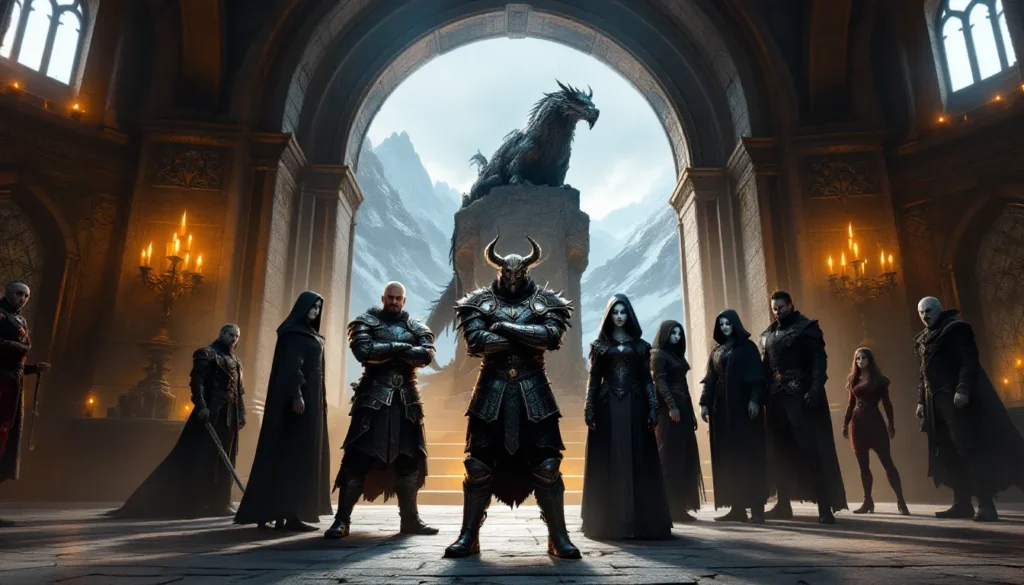
Fifteen years after its initial release, The Elder Scrolls V: Skyrim remains a towering achievement in open-world RPGs, and a huge part of that staying power comes down to its cast. From the morally ambiguous dragons you’re forced to trust, to the snarky housecarl who judges your hoarding habits, Skyrim’s characters are memorable, flawed, and surprisingly human, even when they’re literal lizard people or ancient vampires.
Whether you’re a veteran Dragonborn returning for another playthrough or a first-timer trying to figure out why everyone keeps talking about taking an arrow to the knee, understanding the game’s diverse roster is key to getting the most out of Skyrim. The right follower can turn a brutal dungeon crawl into a cakewalk, while choosing the wrong faction leader to support can lock you out of entire questlines. And let’s not even get started on the emotional weight of certain Daedric Prince encounters.
This guide breaks down every essential character type, from main quest heavyweights to hidden gems tucked away in forgotten corners of Tamriel. We’ll cover who matters, why they matter, and how your choices shape their fates, plus how to pick the perfect skyrim character names when you’re creating your own legend.
Table of Contents
ToggleKey Takeaways
- Skyrim characters—from morally complex dragons like Paarthurnax to memorable followers like Lydia—are the core reason the game remains compelling 15 years after release, each designed with unique personalities, abilities, and questlines.
- Your choice of playable race directly influences how Skyrim characters react to you, affecting dialogue options, merchant interactions, and NPC receptiveness, making character creation a meaningful decision that impacts gameplay.
- Essential NPCs cannot be permanently killed and safeguard main questlines, while over 1,000 named non-essential characters can die permanently, with roughly 60 available as followers and 230 as marriage candidates.
- The civil war questline forces you to choose between Ulfric Stormcloak’s rebellion and General Tullius’s Empire, with neither side declared definitively right or wrong, creating genuine moral weight that shapes which Jarls and faction leaders control Skyrim’s nine holds.
- Daedric Prince encounters like Sheogorath and Hermaeus Mora deliver some of the game’s most memorable quests and powerful artifacts, alongside morally questionable choices that reveal character depth through how you handle them.
- Hidden gems throughout Skyrim—from M’aiq the Liar’s meta-commentary to unique merchants and trainers in remote locations—reward exploration and reveal how the game’s world feels lived-in rather than merely designed.
Understanding Character Types in Skyrim
Before you can appreciate the depth of Skyrim’s roster, you need to understand how the game categorizes its inhabitants. Not all NPCs are created equal, and the game’s underlying systems treat them very differently depending on their role in the world.
Playable Races and Their Impact
Skyrim lets you step into the boots of ten playable races, each with unique racial abilities and starting stat bonuses. Your choice here doesn’t just affect your character sheet, it influences how certain NPCs react to you throughout the game.
The ten races include:
- Nords: The human natives of Skyrim, resistant to cold and fear
- Imperials: Diplomatic humans with a knack for finding extra gold
- Bretons: Half-elven magic users with strong magic resistance
- Redguards: Desert warriors with stamina regeneration perks
- High Elves (Altmer): Magicka powerhouses but often met with suspicion during the civil war
- Wood Elves (Bosmer): Agile archers with disease and poison resistance
- Dark Elves (Dunmer): Fire-resistant refugees with a complicated history in Skyrim
- Orcs (Orsimer): Brutish warriors who can activate Berserk mode
- Khajiit: Cat-like traders barred from most cities, with night vision and claw attacks
- Argonians: Reptilian dock workers immune to diseases and able to breathe underwater
Your race choice impacts dialogue options with characters like Ulfric Stormcloak (who’s more receptive to fellow Nords) or the guards in various holds (who’ll make snide comments if you’re a Khajiit). Some merchant interactions also vary based on race, particularly when dealing with species-specific vendors.
Essential vs. Non-Essential NPCs
Skyrim’s engine makes a critical distinction between essential and non-essential characters. Essential NPCs cannot be killed, if their health drops to zero, they’ll simply kneel and recover after combat. This protection exists to prevent players from accidentally breaking questlines.
Main quest characters like Delphine, Esbern, and all nine Jarls are essential until their story arcs conclude. Some followers like Serana remain essential indefinitely. Non-essential NPCs, but, can die permanently, which means that random bandit attack could wipe out a quest-giver before you even know they exist.
The game tracks over 1,000 named NPCs across Skyrim’s nine holds, each with their own daily routines, relationships, and dialogue trees. According to data compiled by the Unofficial Elder Scrolls Pages, roughly 230 of these are marriage candidates, while about 60 can serve as followers. Understanding which characters fall into which category helps you plan your playthrough and avoid accidentally murdering someone you’ll need later.
The Most Important Main Quest Characters
The main questline introduces you to Skyrim’s most pivotal characters, the ones who drive the dragon crisis narrative and force you to make world-altering decisions.
Paarthurnax: The Wise Dragon Mentor
Paarthurnax sits at the heart of Skyrim’s most controversial moral dilemma. This ancient dragon, perched atop the Throat of the World, serves as your mentor in the Way of the Voice. He teaches you the Dragonrend shout, essential for defeating Alduin.
But here’s the twist: Paarthurnax was once Alduin’s lieutenant during the Dragon War, responsible for countless atrocities against humanity. He defected and taught humans the Thu’um, enabling their rebellion, but the Blades will eventually demand his death as penance for his past crimes.
The choice to spare or kill him has zero mechanical consequences, no achievements, no quest rewards, no stat changes. It’s purely a moral decision, and the community remains divided fifteen years later. Some players argue redemption is possible: others insist past crimes demand justice. Paarthurnax’s voice actor, Charles Martinet (yes, the original voice of Mario), delivers some of the most philosophical dialogue in the game, making the decision even harder.
Delphine and Esbern: The Blades’ Legacy
Delphine runs the Sleeping Giant Inn in Riverwood, but she’s actually one of the last surviving members of the Blades, the ancient order sworn to serve the Dragonborn. She’s paranoid, secretive, and absolutely convinced the Thalmor are behind the dragon crisis (spoiler: they’re not).
Esbern, her colleague, has been hiding in Riften’s Ratway for decades, slowly going mad while researching dragon lore. Together, they recruit you to rebuild the Blades and eventually issue the ultimatum about Paarthurnax.
Many players find Delphine insufferably bossy, she literally commands the Dragonborn, a prophesied hero, around like an errand runner. The game never lets you put her in her place, which has spawned countless mods designed to make her less annoying or allow alternative resolutions to her questline.
Alduin: The World-Eater
Alduin is the primary antagonist, a dragon prophesied to devour the world. In Nordic mythology, he’s not just a big dragon, he’s an aspect of the god Akatosh, tasked with ending the current cycle of time (or kalpa) so a new one can begin.
Except Alduin’s gotten greedy. Instead of fulfilling his cosmic duty, he’s decided to dominate the world and rule over mortals. This corruption makes him vulnerable to defeat, which is where you come in.
The final confrontation in Sovngarde is visually spectacular but mechanically simple, Alduin has 3,071 health on Master difficulty and uses Fire Breath, Frost Breath, and Unrelenting Force shouts. With Dragonrend keeping him grounded and three Nord heroes helping you, the fight is easier than some random dragon encounters. Still, his demise raises unanswered questions about whether you’ve doomed the world to exist in stasis forever, since the proper World-Eater is now permanently dead.
Memorable Companions and Followers
Skyrim allows you to recruit followers to watch your back, carry your excessive cheese wheel collection, and occasionally provide commentary on your life choices. Some are forgettable meat shields. Others become beloved companions players refuse to adventure without.
Lydia: The Housecarl of Whiterun
Lydia is probably the most famous follower in Skyrim, earned automatically when you become Thane of Whiterun early in the main quest. Her iconic line, “I am sworn to carry your burdens”, is delivered with such passive-aggressive exhaustion that it’s become a meme.
She’s a Heavy Armor warrior with One-Handed and Block skills, making her a solid tank for early-game content. Her carry weight of 300 makes her useful for loot hauling, though inventory management becomes a constant hassle.
Lydia is non-essential after recruitment, meaning she can die permanently. Countless players have accidentally killed her with poorly aimed Fireball spells or watched in horror as a giant sent her ragdolling into the stratosphere, never to return. The community’s affection for Lydia is matched only by the collective guilt over the number of times she’s been sacrificed to Boethiah’s shrine for a Daedric quest.
Serana: The Vampire Princess
Introduced in the Dawnguard DLC, Serana is arguably the most developed character in the entire game. She’s the daughter of Lord Harkon, a pure-blooded vampire who was sacrificed to Molag Bal in a dark ritual. Her questline explores themes of abuse, autonomy, and family trauma with surprising nuance.
Unlike most followers, Serana:
- Has hundreds of unique dialogue lines that react to your location and quests
- Can’t be killed under any circumstances (permanently essential)
- Will reanimate corpses to fight for you and use Drain Life magic
- Can be cured of vampirism (though many players refuse, arguing it erases her identity)
- Engages in ambient conversations with you during travel
Her voice actress, Laura Bailey, brings real emotional depth to the role. Serana comments on everything from Dwemer ruins to your choice of spells, making the world feel more alive. She’s also a marriage candidate, or rather, she was supposed to be. Even though having all the dialogue flags, the option was disabled in the final game, spawning countless “Marry Serana” mods.
J’zargo and Other College of Winterhold Followers
The College of Winterhold offers several mage followers, but J’zargo stands out for two reasons: he’s a Khajiit with a hilariously overinflated ego, and he’s one of only two followers with no level cap (the other being the Dark Brotherhood initiate).
J’zargo will scale with you indefinitely, eventually reaching absurd power levels if you keep leveling. His personal quest involves testing his experimental fire cloak scrolls, which have an unfortunate tendency to explode and damage everyone nearby, including you.
Other notable College followers include Brelyna Maryon, a Dunmer who accidentally turns you into various animals during her quest, and Onmund, a Nord who’s perpetually overshadowed by the more interesting mages around him. Most players prefer J’zargo for his combat effectiveness and entertaining dialogue, he frequently brags about his superiority and refers to himself in third person.
Iconic Faction Leaders and Key NPCs
Skyrim’s political landscape is shaped by powerful leaders, each commanding their own sphere of influence and demanding your allegiance.
The Jarls of Skyrim’s Nine Holds
Each of Skyrim’s nine holds is governed by a Jarl, and your choices during the civil war questline can replace nearly all of them. Some are competent rulers: others are drunken disasters.
Notable Jarls include:
- Balgruuf the Greater (Whiterun): Probably the most reasonable Jarl, trying to stay neutral during the civil war. Players generally respect him, and forcing him to choose sides feels genuinely bad.
- Ulfric Stormcloak (Windhelm): Also a faction leader (covered below), but serves as Jarl of Eastmarch. His city has a segregated district for Dunmer refugees, which some view as pragmatic, others as racist.
- Elisif the Fair (Solitude): The young widow of High King Torbald, she’s the Imperial-backed High Queen candidate. Well-meaning but politically naive, often manipulated by her steward Falk Firebeard.
- Jarl Laila Law-Giver (Riften): Completely oblivious to the fact that Maven Black-Briar and the Thieves Guild run her city. If the Imperials take Riften, Maven herself becomes Jarl, making the corruption official.
- Skald the Elder (Dawnstar): A grumpy old Nord who hates magic and non-Nords. Not exactly progressive.
Your actions in the civil war and various hold quests determine which version of each Jarl you’re stuck with, affecting available quests, dialogue, and the overall atmosphere of each city.
Ulfric Stormcloak vs. General Tullius
The civil war forces you to choose between Ulfric Stormcloak’s Stormcloak rebellion and General Tullius’s Imperial Legion. Both have legitimate grievances and problematic aspects.
Ulfric Stormcloak is a charismatic Nord nationalist who used the Thu’um to kill High King Torbald in single combat, sparking the civil war. He fights for Skyrim’s independence from the Empire and the right to worship Talos (banned by the Thalmor-imposed White-Gold Concordat). His critics point to his abandonment of Markarth’s citizens during the Forsworn Uprising and the segregation in Windhelm as evidence of his darker nature.
General Tullius is a pragmatic Imperial soldier who views Ulfric as a shortsighted fool playing into Thalmor hands, a divided Empire can’t effectively resist the Aldmeri Dominion. He has no love for the Thalmor either but sees the ban on Talos worship as a necessary temporary compromise. His critics argue he’s an occupying force suppressing Nord culture and religious freedom.
The game refuses to declare either side definitively right or wrong. Quests like “Season Unending” offer a temporary truce, and experienced players report that the civil war outcomes dramatically change NPC dialogue and city atmospheres regardless of which side wins.
The Dark Brotherhood’s Most Notorious Members
The Dark Brotherhood questline introduces you to a family of assassins, each with distinct personalities and murder methods.
Astrid, the leader of the Falkreath sanctuary, greets you by kidnapping you and demanding you kill someone to prove your worth. She’s pragmatic and business-focused, which eventually leads to her downfall when she betrays you to the Penitus Oculatus in a desperate attempt to save the Brotherhood.
Cicero is the Keeper of the Night Mother, a jester whose grip on sanity is tenuous at best. His high-pitched giggling and fourth-wall-breaking dialogue make him either endearing or insufferable depending on your tolerance for chaos. He becomes a follower and is surprisingly effective in combat.
Babette appears to be a ten-year-old girl but is actually a 300-year-old vampire. She uses her appearance to get close to targets, which is deeply unsettling when you think about it too hard.
The Dark Brotherhood questline culminates in assassinating Emperor Titus Mede II himself, potentially altering the political future of all Tamriel, though the game’s main story never acknowledges this massive event.
Thieves Guild Leaders and Associates
Riften’s Thieves Guild has fallen on hard times when you arrive, thanks to Mercer Frey, the guildmaster who’s been secretly robbing the organization blind for years.
Brynjolf, your initial contact, is a smooth-talking Nord thief who recruits you in the marketplace. Vex and Delvin Mallory provide radiant quests to restore the guild’s influence across Skyrim. Karliah, a Dunmer thief blamed for a murder she didn’t commit, is central to exposing Mercer’s betrayal.
The guild’s questline ties into Nocturnal, the Daedric Prince of shadows and luck, and restoring her favor brings the Thieves Guild back to prosperity. Players who complete the full questline (including the tedious radiant quests) become Guildmaster and gain access to the Nightingale Armor, some of the best stealth gear in the game. Some fans track their progress through extensive quest catalogues to ensure they’ve completed every heist.
The Daedric Princes and Their Mortal Champions
Skyrim features sixteen Daedric Princes, god-like beings who offer some of the game’s most memorable quests and powerful artifacts, usually in exchange for morally questionable acts.
Sheogorath, Hermaeus Mora, and Other Daedric Lords
Sheogorath, the Daedric Prince of Madness, appears in “The Mind of Madness” quest in Solitude. He’s voiced by Wes Johnson, who reprises the role from Oblivion. Sharp-eyed fans noticed that Sheogorath references events from Oblivion’s Shivering Isles expansion, heavily implying he’s actually the Hero of Kvatch (the player character from the previous game) who mantled the title.
His quest involves navigating the paranoid mind of the late Emperor Pelagius III, dealing with surreal challenges like confidence-boosting a self-loathing man and fighting inner demons made manifest. The reward is the Wabbajack, a staff that transforms enemies into random creatures, from sweetrolls to Dremora lords. It’s chaotic, unpredictable, and perfectly on-brand.
Hermaeus Mora, the Daedric Prince of Knowledge and Fate, plays a major role in the Dragonborn DLC. His realm, Apocrypha, is a nightmarish library of forbidden knowledge where books are made from skin and tentacles lurk in pools of ink. He’s obsessed with collecting all knowledge and views mortals as interesting specimens to study and occasionally corrupt.
His champion, Miraak, was the first Dragonborn and serves as the primary antagonist of the Dragonborn DLC. The confrontation between you, the Last Dragonborn, and Miraak, the First Dragonborn, should be epic, though mechanically the fight can be cheesed pretty easily.
Other notable Daedric Princes:
- Meridia: Demands you cleanse her temple of necromancers, rewards you with Dawnbreaker, a sword that explodes undead
- Molag Bal: Forces you to torture a priest to death, gives you the Mace of Molag Bal in return
- Mehrunes Dagon: Offers his razor dagger in exchange for assembling its pieces, with a chance to instantly kill on hit
- Azura: One of the few “benevolent” Princes, her quest involves cleansing her star and choosing its fate
Notable Daedric Quest Characters
The mortals involved in Daedric quests are often as memorable as the Princes themselves.
Erandur, a priest of Mara found in Dawnstar, helps you resolve the town’s nightmare epidemic in “Waking Nightmare.” The twist: he’s actually a former priest of Vaermina who’s trying to redeem himself. At the quest’s end, you can kill him to claim the Skull of Corruption or spare him and gain a follower.
Barbas, a talking dog, is actually the external conscience of Clavicus Vile, the Daedric Prince of Bargains. He guides you through “A Daedra’s Best Friend,” and his constant chatter and invincible status make him both useful and occasionally irritating. The quest ends with a choice: kill Barbas to claim the Rueful Axe, or spare him and receive the Masque of Clavicus Vile instead. The masque is objectively better, and Barbas is genuinely a good dog, so most players spare him.
Silus Vesuius, curator of the Museum of the Mythic Dawn in Dawnstar, wants to restore Mehrunes’ Razor and sends you on a quest to retrieve the fragments. Mehrunes Dagon demands you kill Silus as a final offering, creating another moral choice, though most players kill him because the dagger is too good to pass up.
Hidden Gems: Underrated Characters Worth Finding
Beyond the main questlines and faction leaders, Skyrim is packed with obscure NPCs who reward curious players willing to explore off the beaten path.
M’aiq the Liar and Easter Egg NPCs
M’aiq the Liar is a recurring character across multiple Elder Scrolls games, a Khajiit who wanders Skyrim offering cryptic observations that are actually meta-commentary on game design and fan requests.
His dialogue includes gems like:
- “M’aiq does not understand what is so impressive about shouting. M’aiq can shout whenever he wants.” (mocking the Thu’um mechanic)
- “M’aiq knows much, tells some. M’aiq knows many things others do not.” (classic circular logic)
- “Some have wished for M’aiq to have a family. Perhaps someday there will be a Mrs. M’aiq with little M’aiqs running around.” (addressing requests for children NPCs)
He can’t be killed and has no quest, but finding him feels like discovering a secret message from the developers.
Fultheim, a warrior in Nightgate Inn, is actually a former pirate hiding from his past. His simple dialogue hides a deeper backstory you’ll only discover if you read notes found in separate locations.
Olava the Feeble, a fortune teller in Whiterun, provides a series of clues leading to hidden treasure if you complete the Dark Brotherhood questline. Her predictions are surprisingly accurate and lead to some of the best unmarked loot locations in the game.
Unique Merchants and Trainers
Some NPCs offer services you won’t find anywhere else, making them invaluable for certain builds.
Glover Mallory in Solstheim is a master blacksmith who can craft unique armor and is revealed to be Delvin Mallory’s brother if you complete his side quest. He’s also a Thieves Guild connection on the island.
Enthir at the College of Winterhold is a fence who’ll buy stolen goods without joining the Thieves Guild, incredibly useful if you’re playing a mage-thief hybrid.
Sergius Turrianus, also at the College, is the only NPC who’ll disenchant items at the Arcane Enchanter and is an Expert-level trainer in Enchanting. He’s essential for power-leveling crafting skills.
Fihada in Riften’s Black-Briar Meadery is one of the few NPCs who’ll offer smithing supplies in bulk, making him a favorite among crafters grinding their skills.
Players who focus on specific builds, whether that’s stealth archery (because everyone ends up stealth archery eventually) or two-handed berserker, learn which trainers and merchants are worth tracking down, even if they’re tucked away in remote locations or only accessible after specific quest chains.
Character Development and Relationship Mechanics
Skyrim’s relationship systems are straightforward compared to modern RPGs, but they still offer meaningful ways to interact with the world’s inhabitants.
Marriage Candidates and Romance Options
After completing “The Bonds of Matrimony” quest from the Temple of Mara in Riften, you can marry any of the 30 male or 32 female candidates, same-sex marriage is available without restriction. Bethesda didn’t gate marriage options by questlines or approval ratings: if someone’s marriageable, you just need to wear the Amulet of Mara and ask.
Marriage provides several benefits:
- Your spouse opens a shop, giving you a daily income of 100 gold
- You can ask them to cook a meal once per day, granting a temporary health/stamina/magicka buff
- Sleeping in the same house as your spouse grants the “Lover’s Comfort” bonus (15% faster skill leveling for 8 hours)
- Some spouses are also followers or merchants with unique inventory
Popular marriage candidates include:
- Aela the Huntress: Werewolf, Companion, expert archer, and one of the few essential followers
- Mjoll the Lioness: Unkillable follower found in Riften with strong moral principles
- Farkas: Companion, werewolf, and a gentle giant even though his intimidating appearance
- Brelyna Maryon: College mage with unique dialogue and dark elf mystique
- Vilkas: Farkas’s twin brother, also a Companion, slightly more intellectual
Some characters, like Serana and other major quest NPCs, frustratingly aren’t marriageable even though extensive dialogue and companion features, a decision that’s spawned entire mod ecosystems.
Romance in Skyrim is admittedly shallow. There’s no dating, no approval system, no relationship-building. You wear a necklace, ask if they’re interested, complete a simple quest if required, and boom, wedding at the Temple of Mara. Your spouse will use generic lines regardless of their personality, and emotional depth is limited. But for 2011, even this level of player choice was impressive.
How Your Choices Affect Character Fates
Unlike games with branching narratives and consequential choice systems, Skyrim’s character fates are mostly determined by whether you complete certain questlines and which sides you choose in factional conflicts.
Civil War outcomes are the most dramatic:
- If the Stormcloaks win, Imperial-aligned Jarls are replaced, changing the political atmosphere of multiple holds
- If the Imperials win, Ulfric dies and Stormcloak-aligned Jarls are deposed
- Neutral Jarls like Balgruuf are forced to pick sides, often reluctantly
The Paarthurnax dilemma locks you out of further Blades quests if you refuse to kill him, though the Blades don’t offer much beyond follower recruitment anyway.
Dark Brotherhood choices:
- Completing the questline results in Astrid’s suicide and the Emperor’s assassination
- Destroying the Dark Brotherhood (by reporting Astrid to a guard) wipes out the entire Falkreath sanctuary, killing all members except Babette and Cicero, who escape
Thieves Guild and Companions questlines have minimal branching, you’re mostly on rails once committed.
One subtle system: if you assault or kill NPCs, you’ll accumulate a bounty and potentially turn entire holds hostile. Kill a merchant’s family member, and they may refuse to trade with you. Attack a follower repeatedly, and they’ll eventually leave your service. These aren’t scripted story moments, but emergent consequences of the game’s crime and relationship systems.
The game also tracks your actions in ways that aren’t always obvious. Guards will comment on your achievements (“So you’re the Dragonborn? I used to be an adventurer like you…”), NPCs will recognize you as the leader of various guilds, and your reputation precedes you. These small touches make the world feel reactive even when major plot points are relatively fixed.
Some fans use detailed guides and trackers to ensure they hit every possible outcome across multiple playthroughs, treating each new character as an opportunity to explore a different facet of Skyrim’s narrative possibilities.
Conclusion
Skyrim’s enduring appeal fifteen years after launch comes down to its inhabitants, flawed, memorable, and surprisingly human characters who populate a world that feels lived-in rather than merely designed. From the moral complexity of Paarthurnax to the passive-aggressive brilliance of Lydia, these NPCs have become part of gaming culture in ways few other games have achieved.
Your journey through Tamriel will be shaped by the allies you recruit, the factions you support, and the enemies you make. Whether you’re powering through the main quest, getting lost in side content, or just exploring Skyrim’s many hidden corners, the characters you meet transform the experience from a power fantasy into something approaching an actual story.
And if you’re still debating which skyrim character names to give your Dragonborn or which followers deserve a spot in your roster, remember: in Skyrim, there’s no wrong answer. Just different flavors of chaos, and plenty of sweet rolls to steal along the way.